How to Choose a Creative Hobby You’ll Actually Enjoy
Starting a new hobby can be exciting.
Starting a new hobby can be exciting.
You see something beautiful, imagine yourself making it, buy the materials... and then a few weeks later everything is sitting in a cupboard.
That does not necessarily mean you chose a bad hobby. Sometimes it simply was not the right hobby for you.
I think the best place to start is not by asking “What hobby should I have?” but “What makes me feel good?”
Because if you want something to stay in your life for more than a few weeks, enjoyment has to be at the centre of it.
A hobby can challenge you. It can take time to learn. It can occasionally frustrate you. But underneath all of that, there should still be something that makes you want to come back.
When choosing a creative hobby, think first about what you enjoy doing rather than what you would like to show at the end.
You may immediately have several ideas, and that is fine. Write them down. The purpose is not to choose perfectly on the first try. It is to narrow the possibilities until you have two or three activities that genuinely sound enjoyable.
If you would rather not do it alone, there are plenty of creative things to do with your mum at home, and sharing an afternoon is often the easiest way to begin.
Sometimes the clues are already there. Think about the activities or projects you can spend hours doing without constantly checking the time.
You may have strengths you barely notice because they already feel normal to you. Perhaps you are patient, good with your hands, naturally drawn to colour, good at solving little problems or willing to experiment until something works.
Those things can help point you towards hobbies that may suit you. But your existing strengths should not become limits either. A hobby can also be somewhere you develop something completely new.
The first few days of almost any hobby can feel exciting simply because it is new. But imagine doing the same activity six months from now.
This matters because some people genuinely enjoy repetition. They find it calming. Other people need variety, new ideas and room to experiment. Neither is better. You simply need to understand which kind of experience keeps you interested.
It is easy to imagine a hobby in an ideal world where you have endless time, money and space. Real life is different. Before spending much money, ask yourself:
A hobby that looks wonderful but needs a room you do not have, equipment you cannot comfortably afford or hours of uninterrupted time may become stressful instead of relaxing.
The hobby should fit into your life rather than your life having to reorganise itself around the hobby.
You do not need the best equipment on day one. In fact, I think starting small is much safer. Buy, borrow or use only what you need to experience the activity properly. Then see how you feel.
If you genuinely enjoy it, you will probably start adding things naturally. As your skills improve, you become curious about different materials, tools or techniques. You do not have to force that process. Your interest pulls you forward.
And if that does not happen, you have still learned something useful without spending a fortune. You can pass the materials to somebody else, sell them or simply move on without feeling guilty.
Finding out that something is not for you is not a failure.
It is part of finding what is.
It can help to think about your weaknesses as well as your strengths. But not every weakness needs fixing. There is an important difference between “I’m not good at this yet, but I’d enjoy learning.” and “I’ve tried this, and I genuinely do not enjoy developing this skill.”
The first may simply need practice. The second may be a sign that this particular hobby is not the right fit for you.
You do not need to turn every weakness into a strength. Sometimes recognising what is not for you gets you much closer to what is.
I often hear people say “I’m not creative.” or “I’m not artistic enough.” I think that often comes from expecting too much from ourselves, or comparing what we make as beginners with somebody else’s work after years of practice.
I believe creativity is something we all have. Sometimes it has simply been asleep for a while.
When you start making things, your brain begins noticing possibilities you may never have considered before. You try something. You change it. You suddenly think: “What if I did this instead?” Those ideas start appearing more naturally the more you use them.
And if you create something you have never seen before, that does not mean it is wrong. It may simply be yours. That is the beautiful part.
Sometimes you only need a little direction or inspiration at the beginning. After that, you learn to trust yourself.
One of the easiest ways to spoil a hobby is to immediately decide it needs to become useful. You do not have to sell what you make. You do not have to become excellent at it. You do not even have to show anybody.
Of course, a hobby can become something more. You might create gifts for people you love, decorate your home, wear what you make or eventually decide you would like to share your work more widely. But none of those things are necessary.
Doing something simply because it gives you an hour that belongs to you is enough. If you finish feeling calmer, happier or pleased that you spent time doing something you love, the hobby has already given you something valuable.
There can be many reasons. Sometimes we expect good results too quickly. We struggle at the beginning, compare ourselves with people who are much further ahead and decide we are simply not good at it.
Sometimes the activity becomes repetitive. Sometimes it costs more than expected. Sometimes it does not challenge us enough, or challenges us so much that every session feels frustrating. And sometimes the interest simply fades.
One useful sign is what happens when you miss your usual hobby time.
You should not have to constantly force yourself back to something that is meant to bring enjoyment.
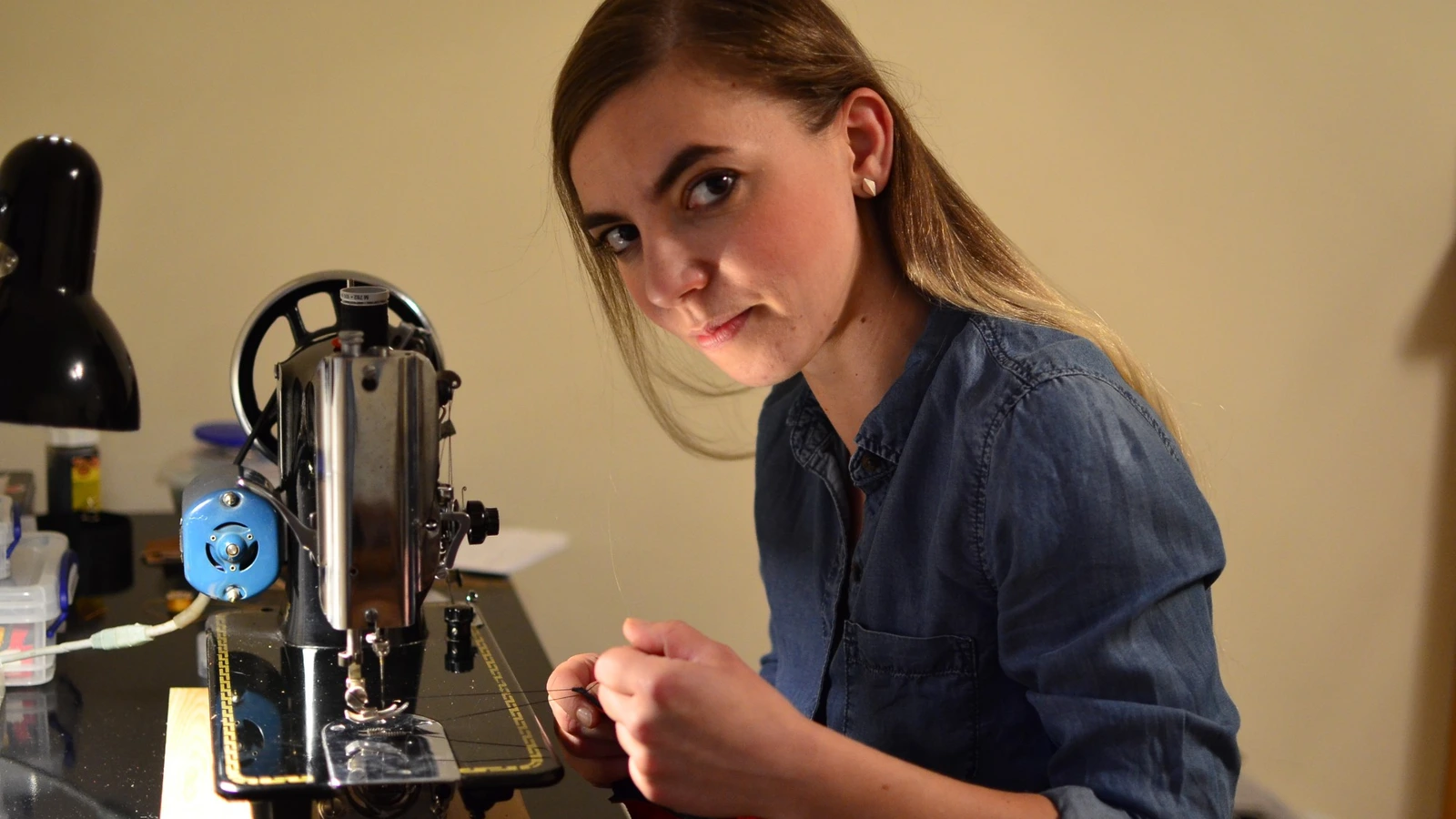
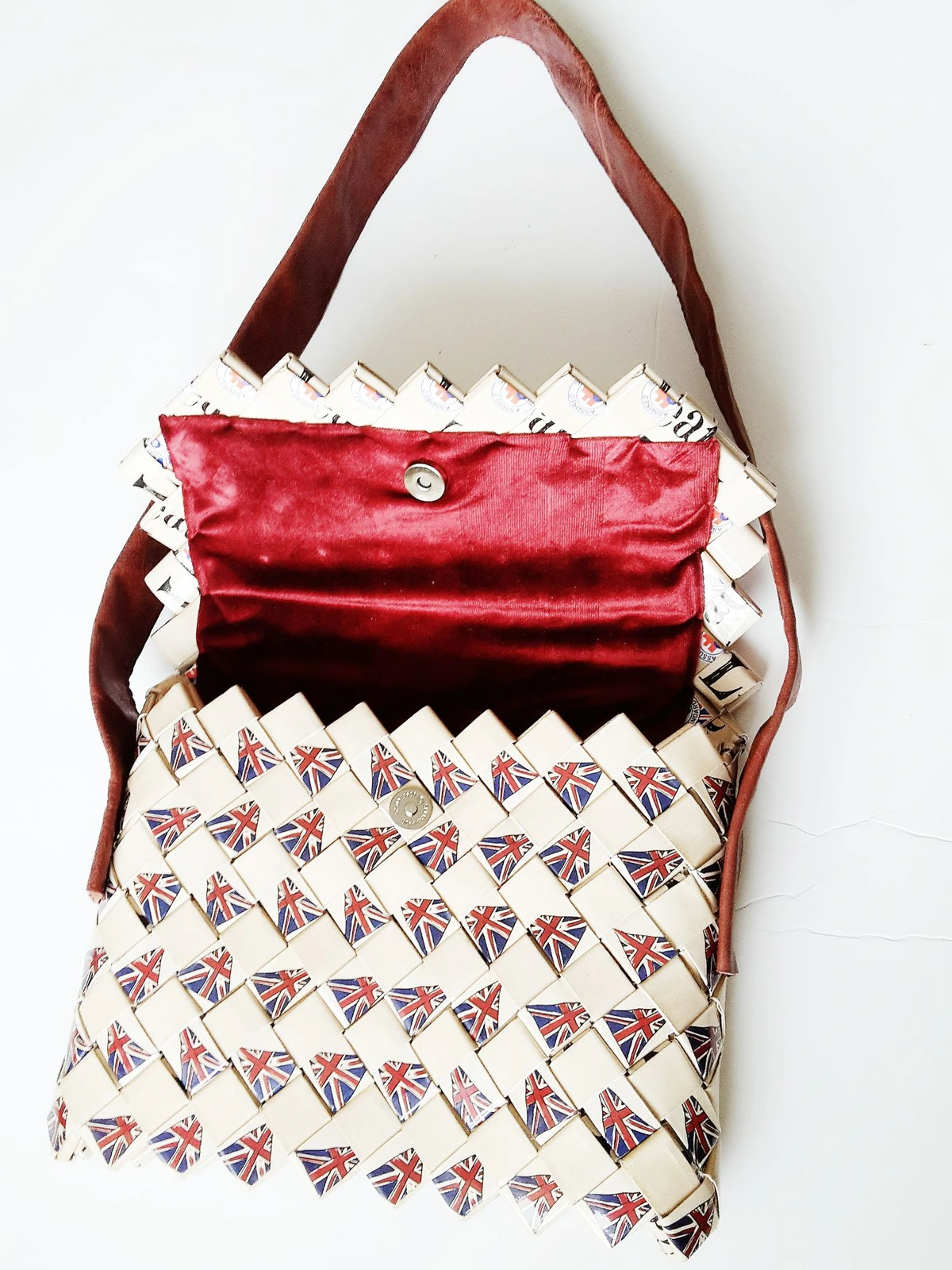
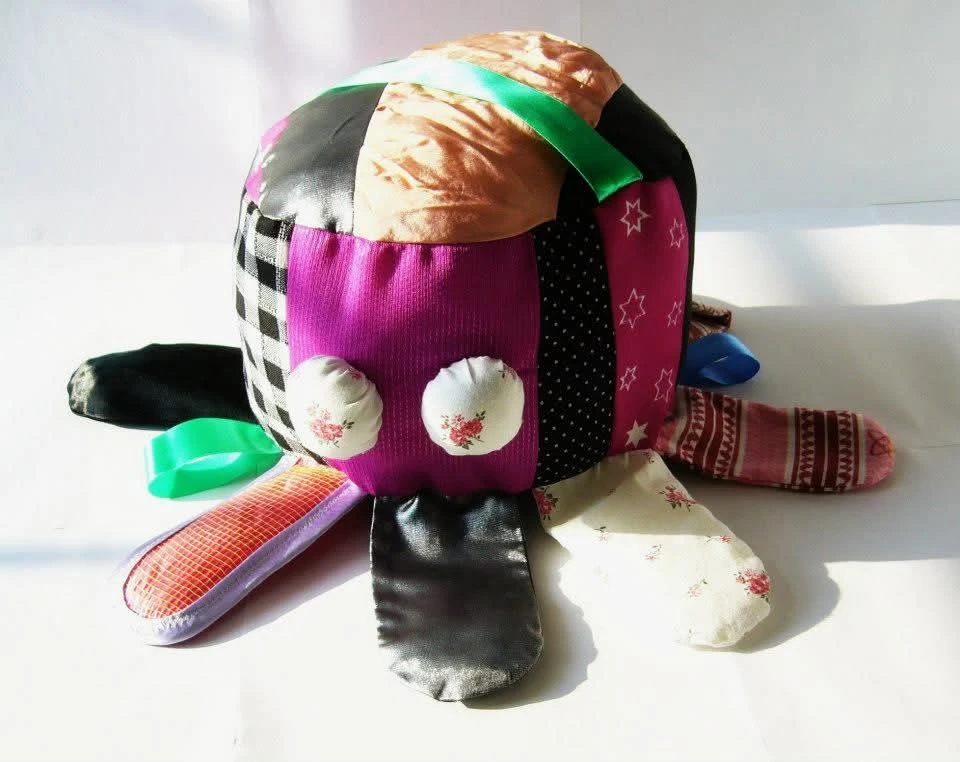
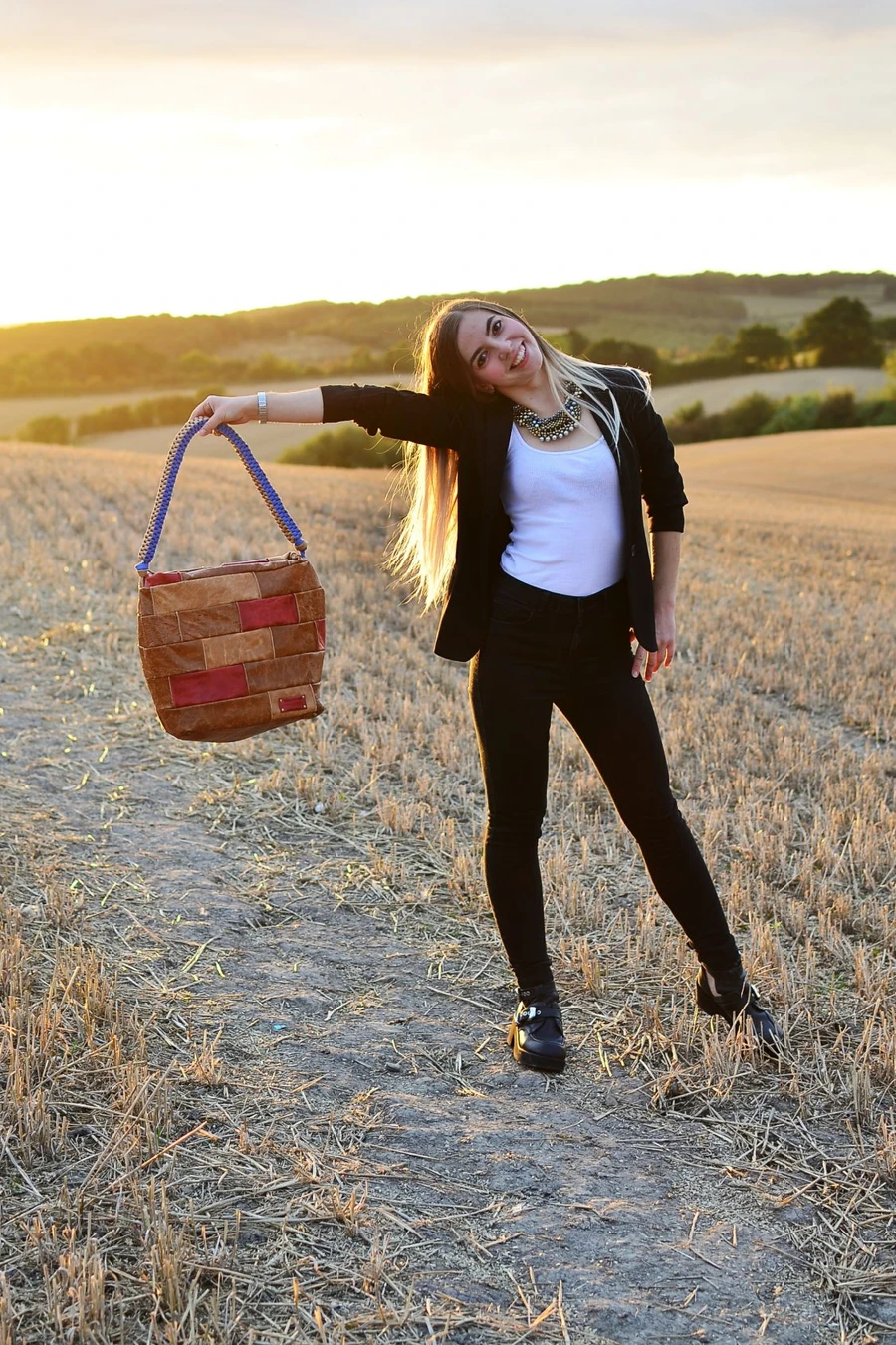
I have tried many creative things over the years. My mum taught me to sew, and eventually I made clothes such as dresses, trousers and jackets. Later I made bags, including leather bags. I tried origami and even made bags from paper. After my son was born, I sewed toys for babies. I have gardened too.
I enjoyed all of those things. But I could stop doing them and be completely fine with that. They were interesting. They were fun. But they never pulled me back strongly enough to become something I could not imagine leaving behind.
Then I discovered silk painting. And that was different.
One day a friend came to see me with a silk scarf. There was a hand-painted flower on it. I remember looking at this incredibly delicate fabric and finding it difficult to understand how somebody could actually paint on it.
What fascinated me even more was that the painted area was still soft. I thought it was amazing. And almost immediately I wanted to know: could I do this myself?
When I finally tried it, I fell in love from the first strokes. I watched the dye spread through the silk in this harmonious way and saw the colours flow into one another.
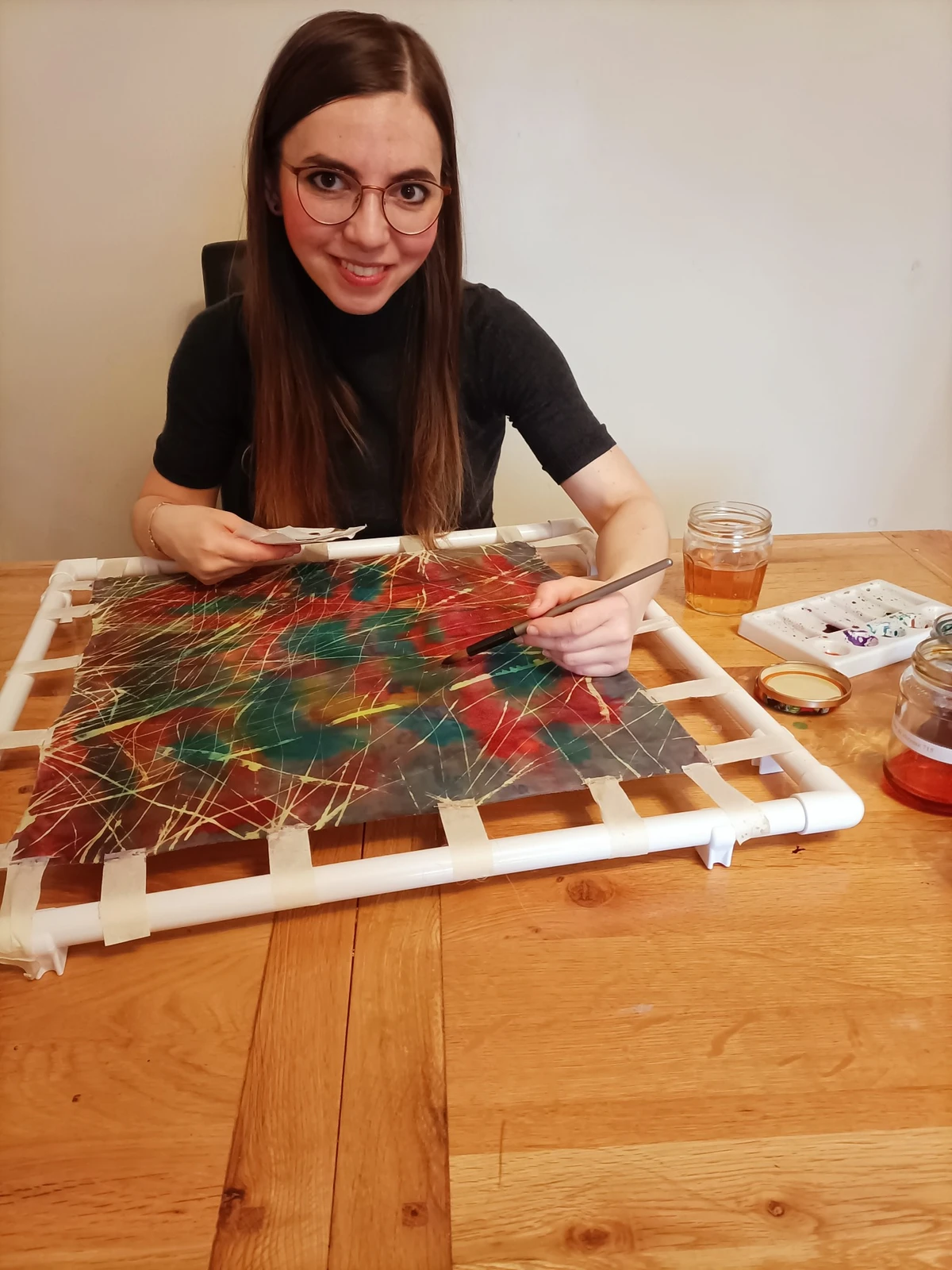
That was the beginning of my silk-painting journey. And unlike the hobbies I had tried before, this one never disappeared.
One of the things I love most about silk painting is that it is unpredictable. There are so many techniques, and they can also be combined. You can keep experimenting.
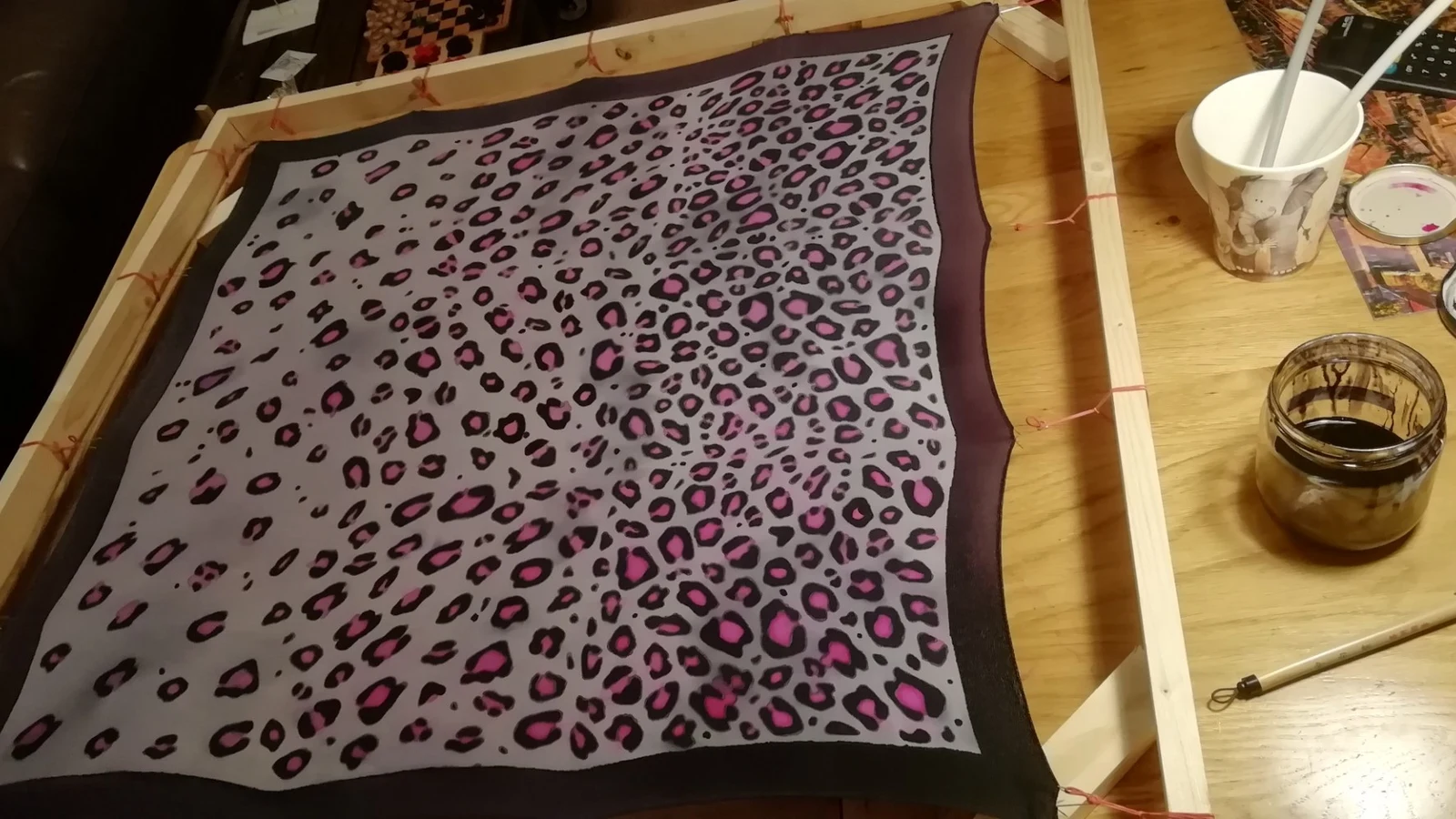
You can frame the finished silk as artwork. You can wear it. You can turn it into a scarf, jewellery or something decorative. There are examples of finished pieces in my gallery.
And you do not necessarily need years of practice before you can create something beautiful. Sometimes the dyes and paints do part of the work for you. You learn how to guide them, but you also allow them to move.
Watching dye flow through silk and colours blend together still feels magical to me. I often paint with relaxing music after a stressful day. That is my time. I can become completely absorbed in it.
Sometimes I do not even know what I am going to create when I begin. I simply take my brushes and dyes and let instinct guide me. That is probably why I cannot imagine becoming bored with it. There is always somewhere else to go.
Then try the smallest realistic version of each. Most importantly, do not ask “Am I good at this?” Ask “Do I want to do this again?” That answer will usually tell you much more.
The right creative hobby is not necessarily the most impressive one. It is the one you naturally make room for. The one you think about when you are not doing it.
The one that gives you something you were missing: relaxation, challenge, curiosity, expression, quiet time or simply fun.
And sometimes you need to try a few things before you recognise it. That is completely fine. You are not wasting time. You are learning what makes you feel like you.
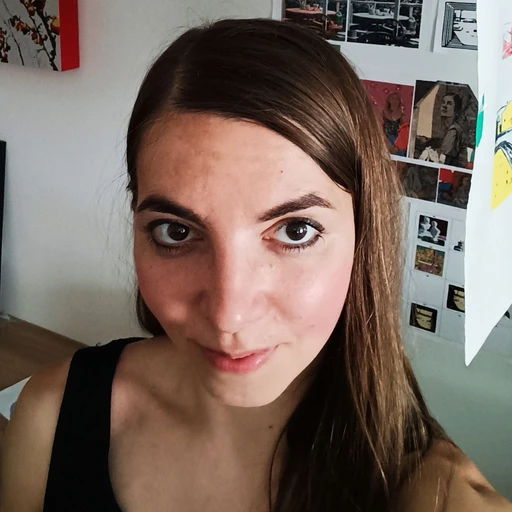
Ania has painted silk for over a decade and enjoys teaching, experimenting with techniques and helping others develop their creativity.
Creative Hobbies
Ways to spend an evening away from a screen, and how to make a creative hobby easy enough that you actually start it.
Read Article
Creative Confidence
Why “I’m just not artistic” is usually a confidence problem rather than a creativity one, and what to do about it.
Read Article
Time Together
Why an ordinary afternoon making something with somebody can outlast a far more expensive day out, and how to choose what to do.
Read Article